
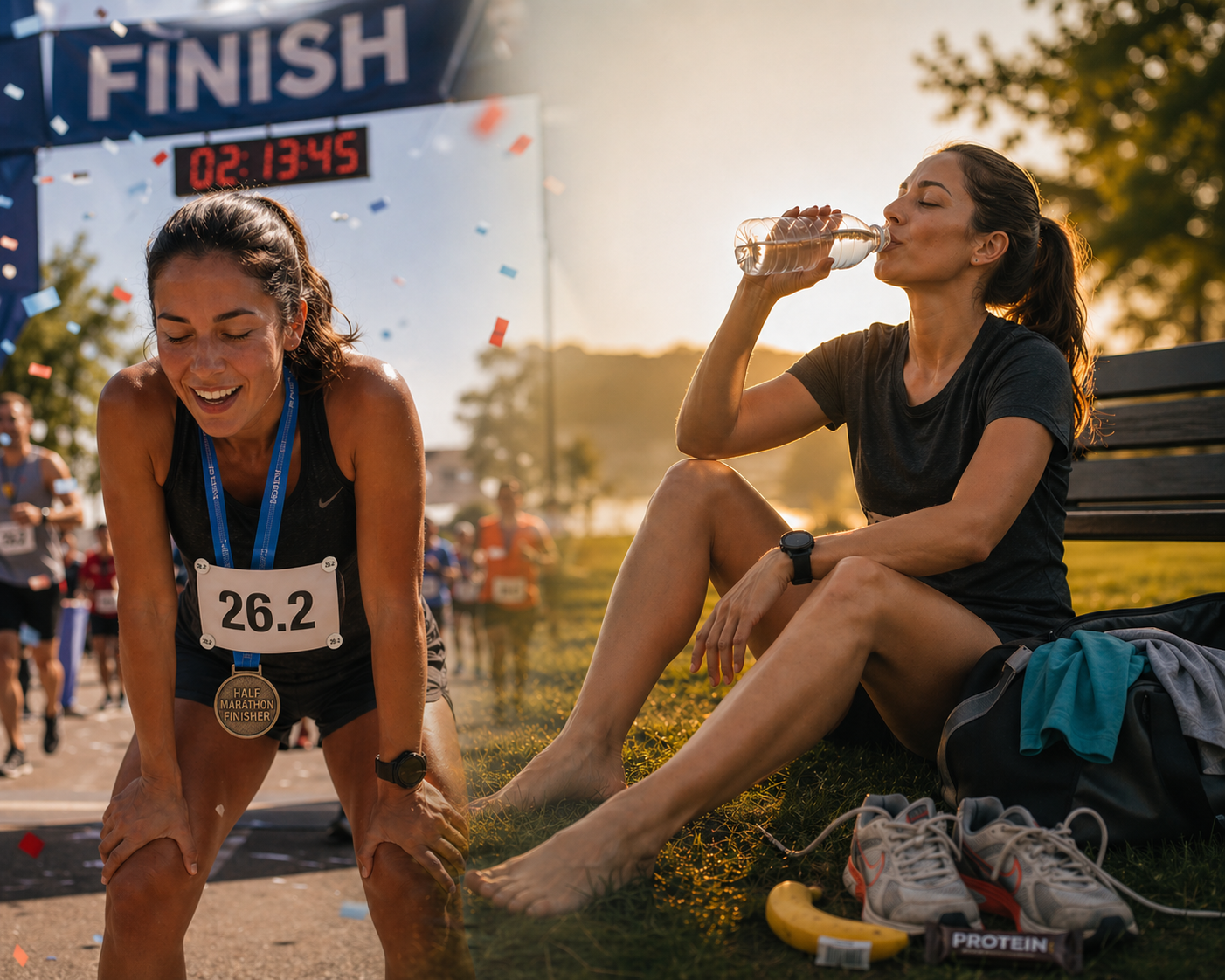
You crossed the finish line. The medal is around your neck, the photos are taken, and the adrenaline is starting to fade. Now what? What you do in the first 48 hours after a race matters more than most runners realize. A smart recovery routine helps your body bounce back faster, reduces soreness, and sets you up to enjoy your next training cycle instead of dragging through it.
Whether you just finished a 5K or a full marathon, the steps are surprisingly similar. Here is a practical guide to recovering well after race day.
Why the First 48 Hours Matter So Much
During a race, your muscles experience micro-tears, your glycogen stores get depleted, and your immune system temporarily dips. The first two days are when your body does the heaviest repair work. If you skip recovery or jump straight back into hard training, you risk prolonged soreness, fatigue, and even injury. Giving yourself permission to recover is not lazy. It is one of the smartest things you can do as a runner.
What to Do Right After You Cross the Finish Line
The first 30 minutes after finishing are important. Keep walking for at least five to ten minutes. Your body needs to gradually bring your heart rate down, and stopping abruptly can cause dizziness or cramping. Gentle movement helps your circulation flush out metabolic waste from your muscles.
Start sipping water or an electrolyte drink as soon as you can. Steady sipping over the next hour helps replace what you lost through sweat. If the race provided post-race snacks, grab something with both carbohydrates and a little protein. A banana with pretzels, a granola bar, or a bagel with peanut butter all work well.
This is also a great time to change out of your wet race clothes. Sitting around in damp, sweaty gear can lead to chills and skin irritation. If you packed a dry shirt and fresh socks in your gear bag the night before, you will be glad you planned ahead.
The Rest of Race Day: Keep It Simple
Once you get home or back to your hotel, resist the urge to do anything strenuous. Your job for the rest of the day is to eat well, hydrate, and rest. A warm shower can help relax tight muscles, but skip ice baths unless you have used them regularly during training and know they work for you.
Eat a balanced meal within a couple of hours of finishing. Focus on carbohydrates to replenish glycogen, protein to support muscle repair, and some healthy fats. A bowl of pasta with grilled chicken, a rice bowl with vegetables and salmon, or even a hearty sandwich all do the job. This is not the time to restrict calories. Your body needs fuel to rebuild.
Elevating your legs for 15 to 20 minutes while you relax can help reduce swelling, especially after longer races. Lying on your back with your legs up against a wall is an easy way to do this.
Day One After the Race
You are going to be sore. That is completely normal. The day after a race is often when delayed onset muscle soreness starts to set in, and it can peak around 24 to 48 hours post-race. The best approach is gentle movement. A 15 to 20 minute easy walk can help loosen stiff muscles without adding stress. Light stretching is fine if it feels good, but do not force anything.
Continue prioritizing hydration and nutrition. Your body is still in repair mode, so keep eating balanced meals and drinking plenty of water. Some runners find that tart cherry juice or foods with natural anti-inflammatory properties help with soreness, though results vary from person to person.
Sleep is your most powerful recovery tool. If you can get an extra hour of rest on this day, take it. Your body does its deepest repair work during sleep, so embrace an early bedtime or a nap.
Day Two After the Race
By the second day, some runners start feeling a little better while others hit their peak soreness. Both are normal. Listen to your body. If you feel up for it, another easy walk or a very gentle bike ride can promote blood flow and speed up recovery. If you are still very sore, more rest is the right call.
This is not the day to test your fitness or squeeze in a hard workout. Even if your legs feel surprisingly good, your muscles, tendons, and connective tissue are still healing beneath the surface. Most coaches recommend waiting at least three to five days after a 5K or 10K and one to two weeks after a half marathon or marathon before returning to structured training.
Use this time to reflect on your race. What went well? What would you change next time? Writing a few notes while the experience is fresh can help you prepare better for your next event.
How to Prepare for Better Recovery Before You Even Race
Good recovery actually starts with good preparation. Runners who lay out their gear, attach their bib, and organize their race-morning essentials the night before tend to sleep better and start the race less stressed. Using bibboards.com products like bibSNAPS to secure your bib the evening before eliminates one more thing to fumble with on race morning, which means less stress and more energy saved for the run itself.
Packing a recovery bag with a change of clothes, snacks, water, and a foam roller or massage ball also makes the post-race transition smoother. When everything is ready, you can focus on what matters most: celebrating what you just accomplished and taking care of your body afterward.
Quick Takeaway
- Keep moving gently after you finish, hydrate steadily, and eat a balanced meal within two hours of crossing the finish line.
- Prioritize sleep, easy walks, and good nutrition for the full 48 hours after your race to give your body the repair time it needs.
- Do not rush back into hard training. Patience in the first two days leads to stronger, healthier running in the weeks ahead.
You Earned This Rest
Finishing a race is an accomplishment worth celebrating, no matter the distance or your finishing time. The runners who stay healthy and keep improving over the long run are the ones who take recovery as seriously as they take their training. So put your feet up, eat something good, get some sleep, and trust that your body knows how to rebuild. You did the hard part. Now let recovery do its work.



Leave a comment
This site is protected by hCaptcha and the hCaptcha Privacy Policy and Terms of Service apply.