
Go pinless. Your race shirt will thank you.
Key Takeaways:
- Safety pins put four holes in your shirt at every race. Technical running fabric does not heal. The holes are permanent.
- bibSNAPS are a two-piece fastener that never pierces anything. A base sits behind the bib, a top snaps over it, and the fabric is pushed into a recess and held there.
- It takes under 30 seconds to attach a bib with four bibSNAPS, one at each corner.
- They are reusable. They pop off after the race and go in your kit bag for the next one.
- They do not interfere with chip timing, which is the main risk with magnetic bib holders.
- Sets start at $10, and one set does one bib.
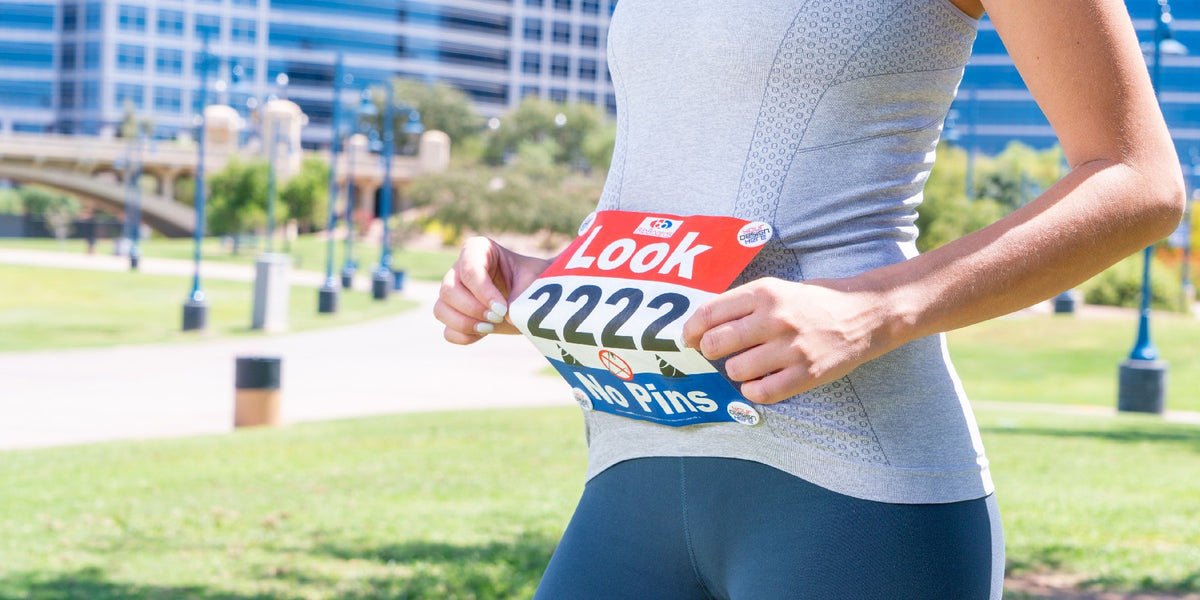
Why runners are giving up safety pins
Safety pins have been the default at packet pickup for about a hundred years, and they have never been good at the job. They are just what was in the bag.
Here is what four pins actually cost you:
- Permanent holes in technical fabric. A cotton t-shirt closes up. Modern wicking fabric does not. Every race leaves four small punctures that stay there for the life of the shirt.
- A bib that shifts and flaps. Pins pierce a single point. The bib rotates around it, and by mile three you have a paper flag slapping your stomach.
- Fingers pricked at the worst moment. Fumbling with pins in a cold car park twenty minutes before a start is nobody's idea of a warm-up.
- They are single use in practice. Most pins end up on the floor of the finish area.
None of this is dramatic. It is just a small, repeated annoyance that everyone accepted because there was no obvious alternative. Now there is.
How bibSNAPS work
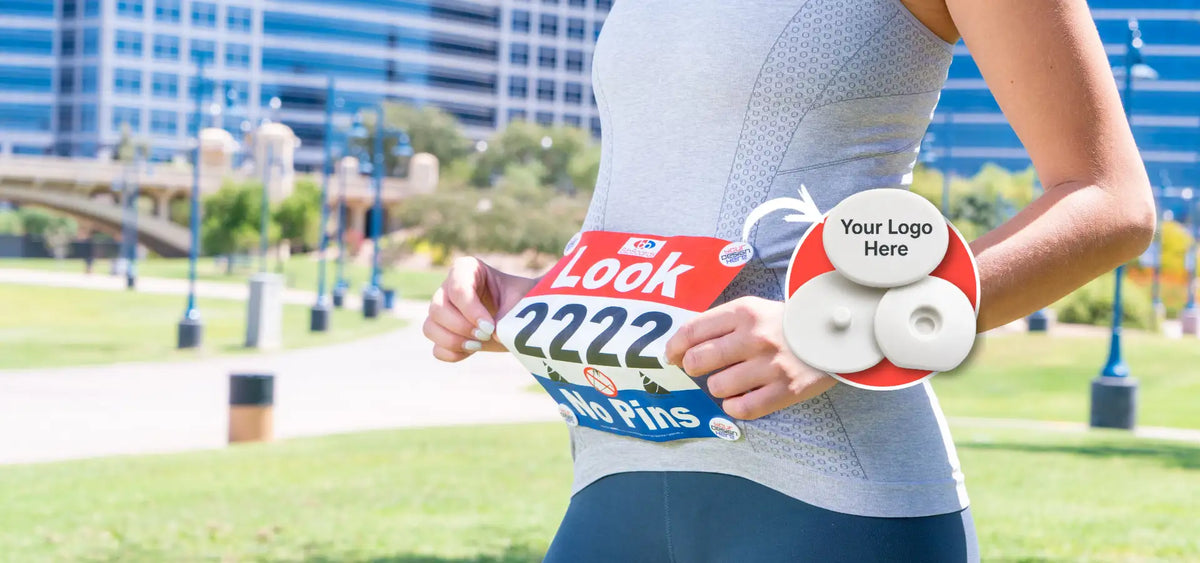
A bibSNAP is two pieces. A smooth base goes behind the corner of your bib, behind the fabric of your shirt. A top piece snaps onto it from the front.
The important part is what happens in between. The two pieces do not clamp flat. The top piece pushes a small amount of your bib and your shirt down into a recess in the base, and that fold is what holds. Nothing is pierced, and the grip comes from the shape rather than from pressure, which is why it does not slip.
Four steps, and it takes less time than threading one pin:
- Position your bib. Put it on your shirt exactly where you want it to sit.
- Place the base. One smooth base piece behind each corner of the bib and fabric.
- Snap and lock. Press the top piece on. The fabric locks into the recess.
- Pop off and reuse. After the race they come straight off, ready for the next start line.
One set is four bibSNAPS, one for each corner of a single bib. See the full step by step with photos.
bibSNAPS compared to the alternatives
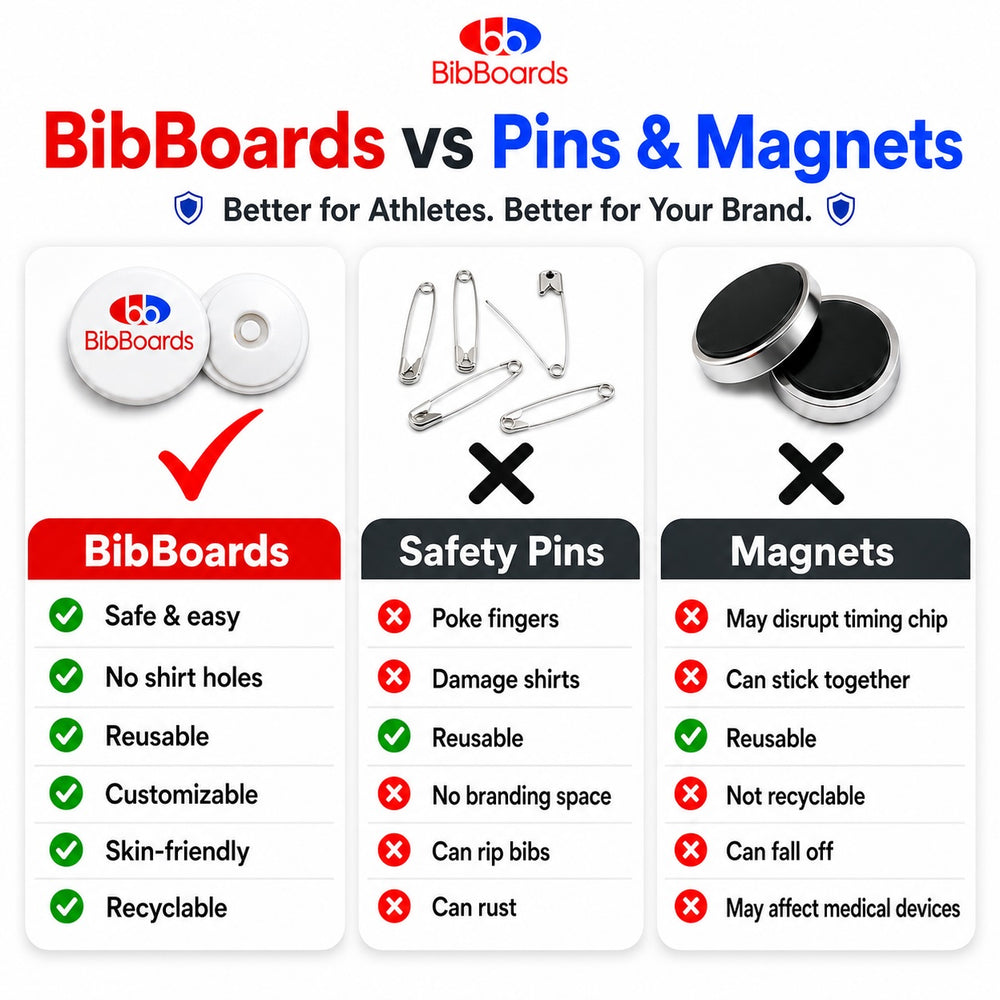
| Safety pins | Magnetic holders | bibSNAPS | |
|---|---|---|---|
| Holes in your shirt | Four per race | None | None |
| Safe with chip timing | Yes | Risk of interference | Yes |
| Reusable | In theory | Yes | Yes |
| Holds in wind and rain | Pivots on the pin | Can slide on thin fabric | Locked into a recess |
| Comfortable against skin | Sharp points | Bulky | Flat and smooth |
| Attach time | 2 to 4 minutes, with swearing | Under a minute | Under 30 seconds |
The chip timing row is the one worth pausing on. Magnets are a genuinely popular answer to the pin problem, and they solve the holes. But strong magnets sitting on your race bib are near the timing chip on many bib designs, and that is a risk you carry for the whole race without knowing whether it has cost you. We wrote about that in more detail on race bib magnets versus bibSNAPS.
Do they actually hold?
This is the question everyone asks, and it is the right one. A bib that comes off at mile eighteen is worse than four holes in a shirt.
The hold comes from geometry rather than grip strength. Because the top piece pushes fabric into a recess rather than squeezing it flat, the bib cannot rotate or peel the way it does on a single pin. There is no pivot point. More than five million athletes have used them, across road races, trail, triathlon and track.
They also stay comfortable, which matters over a long race. The outer surface is smooth and sits flat against the body, so there is nothing to rub or scratch through repeated motion.
Which set should you buy?
- Racing this season and want to stop thinking about it. Any single set. One set does one bib, and it lasts for years. Browse all bibSNAPS designs.
- You want them to look like something. There are over 75 designs, from plain to loud. Start with the most popular ones.
- You are buying for a household of runners. Multi-packs work out cheaper per bib.
- You are a race director, club or brand. Put your logo or your sponsor's logo on them. Custom bibSNAPS start with a free digital proof within 24 hours, and bulk pricing drops as low as $3.49 a set.
- You also print the bibs. We do those too, on tear and water resistant Tyvek. Custom race bib numbers.
Four mistakes runners make attaching a bib
Whatever you fasten it with, most bib problems come from the same handful of errors.
- Fastening only two corners. Two attachment points let the bottom edge lift and catch the wind. It is the single most common cause of a flapping bib, and it is why bibSNAPS come in sets of four.
- Attaching it while the shirt is on. You end up pinching skin, or fastening the bib to a fold that disappears when you stand up straight and leaves the bib crooked. Lay the shirt flat.
- Placing it too low. A bib worn low on the stomach folds every time you drive a knee up. Chest height, centred, is what photographers and timing mats both want.
- Covering the timing chip. On many bibs the chip is a foam square on the back. Do not fasten anything through it or press a magnet against it.
Get those four right and the bib will still be flat and readable in the finish photo.
Frequently asked questions
Will bibSNAPS damage my race bib?
No. Nothing pierces the bib. The fastener holds by pushing the paper and fabric into a recess, so the bib comes off intact and can be kept as a souvenir.
Do they work on any fabric?
They work on the technical fabrics runners actually wear, including thin singlets, and on heavier layers. Very thick fabric such as a winter jacket is the limit.
Do they interfere with chip timing?
No. bibSNAPS contain no magnets and no metal, which is the main reason some runners switch to them from magnetic holders.
How many do I need?
One set of four, one at each corner of the bib. If you race in a household of three, you need three sets, or one multi-pack.
Can I reuse them?
Yes, that is the point. They pop off in a second after the race and go back in the kit bag. There is no wear mechanism that limits how many races you get.
Are they recyclable?
They are made from 100% recyclable material, though most people never throw them away because they keep using them.
What about triathlon, where the bib moves from bike to run?
They come off and go back on in seconds, which is faster than repinning in transition. Many triathletes use a race belt for the bib itself and bibSNAPS for the run leg.
Ready to stop making holes?
Shop all bibSNAPS, or if you are kitting out a whole race, get a free custom proof in 24 hours.
Still deciding? These go deeper: