

Most runners know the feeling. You hit the halfway point feeling decent, maybe even good, and then something shifts. Your legs get heavier. Your pace slips. That finish line that felt close starts to feel very far away.
Finishing strong is one of the most satisfying things in running. It takes intention, patience, and a bit of strategy. The good news is that it is a skill you can develop. Here is what actually works.
Why Runners Fade in the Second Half
The most common reason runners slow down late in a race is simple: they went out too fast.
It is easy to do. Race-day energy is real. The crowd is there, your legs feel fresh, and everything in your body is saying go. But when you burn through your reserves in the first half, the second half becomes damage control instead of a strong finish.
The other factor is fueling. Runners who skip or delay mid-race nutrition often hit a flat spot around the two-thirds mark. By the time you feel the need for fuel, it is usually too late for it to help in that race.
Knowing these two things, starting pace and fueling timing, gives you the biggest leverage for running a better second half.
Start Slower Than You Think You Need To
This advice sounds simple, but it goes against every instinct on race morning.
A good rule of thumb is to run the first mile at least 15 to 20 seconds slower than your goal pace. If your target is a 10-minute mile, run mile one at 10:15 or 10:20. It will feel too easy. That is how you know you are doing it right.
Running conservatively early keeps your muscle glycogen intact and prevents the early buildup of fatigue that causes fading later. Runners who run even splits, or better yet, run the second half slightly faster than the first, almost always feel better crossing the finish line.
The Two-Part Mental Trick
There is a mental approach that many experienced runners use that makes the second half much more manageable: split the race into two separate efforts.
In the first half, your only job is to stay relaxed, stay on pace, and save your legs. Do not respond to other runners surging ahead. Do not worry about your overall time. Just stay steady.
In the second half, give yourself permission to start racing. Each mile you hold your pace while others slow down is a small win. Use landmarks, aid stations, mile markers, turns, as checkpoints. Focus on getting to the next one, not the finish line.
This shift in mindset helps break the race into manageable pieces instead of one long grind.
What to Do When It Gets Hard
Every race has a moment where things get uncomfortable. That is not a sign something is wrong. That is just racing.
When the effort gets hard, focus on your form before your pace. Relax your hands and shoulders. Think about keeping your cadence quick and light. Short, efficient steps are easier to maintain under fatigue than long, heavy ones.
If you are feeling strong enough to push, wait until you are within two miles of the finish before you open it up. Many runners try to surge too early and end up paying for it in the final stretch.
Fuel Earlier Than You Think You Need To
For races of a half marathon or longer, fueling during the race is not optional. It is part of your strategy.
Take your first fuel, a gel, chews, or whatever you trained with, somewhere between miles 4 and 5, before you feel any sign of fatigue. Taking it early gives your body time to absorb it and use it when you need it most, around miles 8 through 11.
Practice your fueling in training so there are no surprises on race day. Your gut adapts, and knowing exactly how your body responds to race fuel removes one more variable from your race.
Prepare Your Gear Before the Morning Rush
One thing that quietly affects your second-half performance is how you feel at the starting line. If your race morning is chaotic, hunting for pins, fumbling with your bib, rushing out the door, you carry that stress into the race.
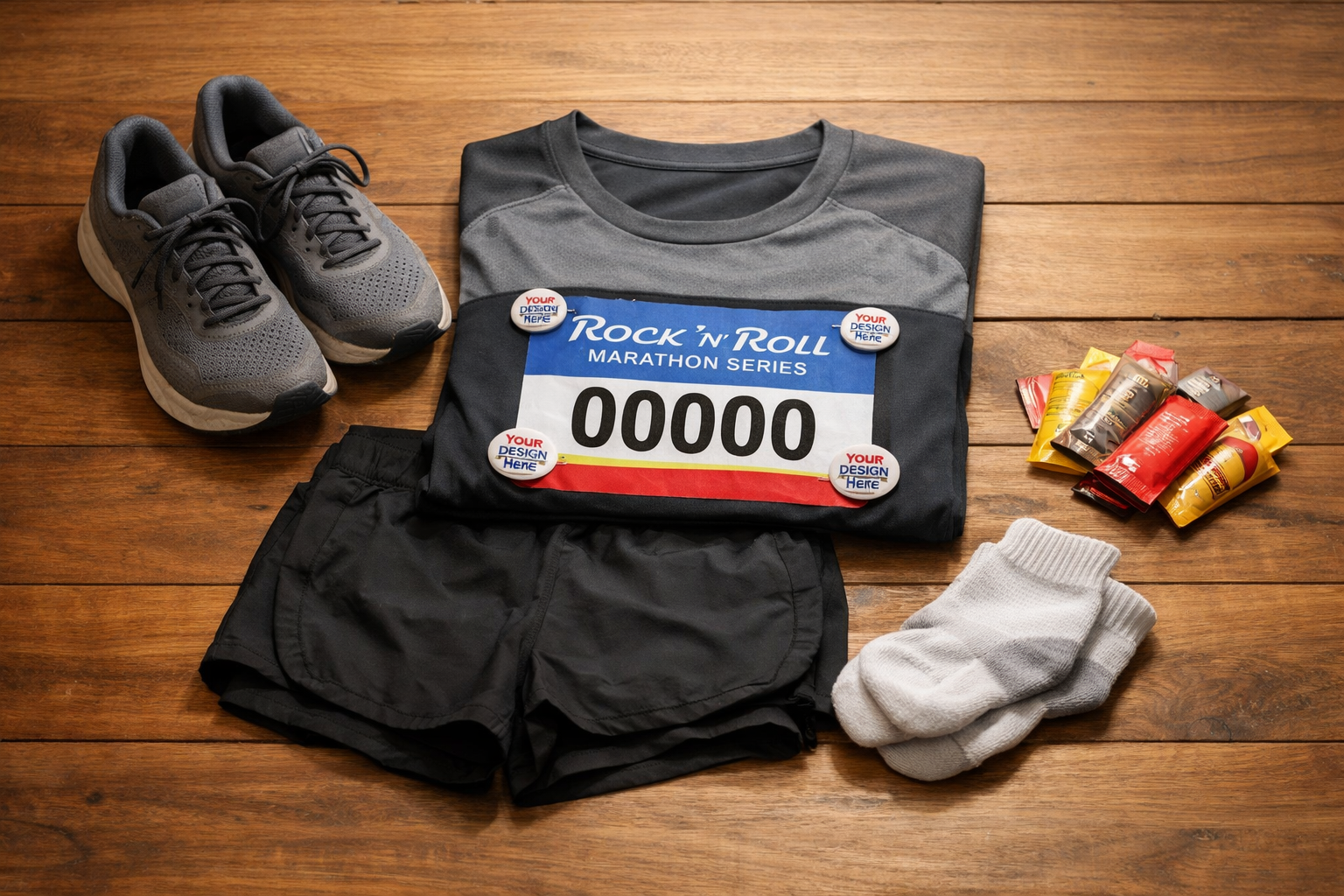
Getting your gear fully ready the evening before makes a real difference. That means your clothes laid out, your shoes by the door, and your race bib already attached and ready to go. Runners who use bibSNAPS from BibBoards can attach their bib the night before in seconds, no pins, no poking, no last-minute scrambling. It is a small thing, but a calm race morning leads to a smarter, more controlled start.
Quick Takeaway
- Start the first mile 15 to 20 seconds slower than your goal pace. The restraint early is what gives you strength late.
- Divide the race mentally into two halves: conserve in the first, compete in the second.
- Fuel early and consistently in longer races so your body has what it needs when it counts.
The Last Push
Running a strong second half is not about being faster or more talented. It is about being smarter. Patient runners who trust their pacing strategy almost always finish better than runners who go all in from the start.
The finish line feeling of passing people instead of being passed, of running your best miles at the end, is one of the best things running has to offer. With a little preparation and the right approach, it is completely within reach.


Leave a comment
This site is protected by hCaptcha and the hCaptcha Privacy Policy and Terms of Service apply.