
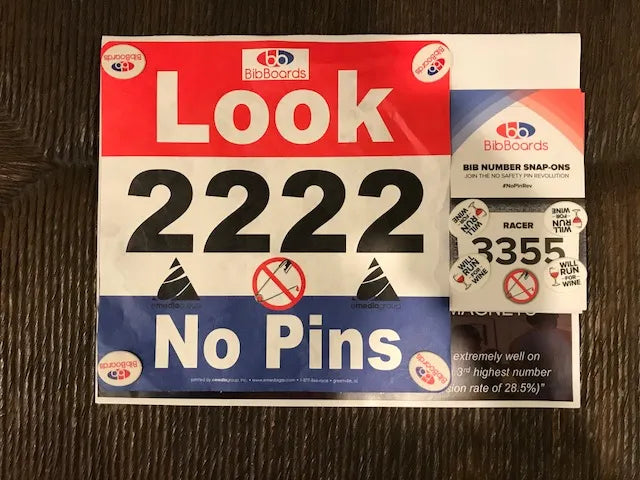
Walk up to a packet pickup table at almost any race and you will see the same setup. A volunteer hands over a bib, points to a small dish of safety pins, and sends the runner on their way to figure out the rest alone. It works, but it has worked the same way for decades, and a growing number of race directors are starting to ask whether it is the best a packet pickup table can do. Here is what changes when safety pins are taken out of the picture, for volunteers, for race morning, and for the runners walking through the line.
The packet pickup table most runners know
A traditional packet pickup line moves fast because it has to. Volunteers hand over a bib, a timing chip, maybe a shirt, and a small dish of loose safety pins, then wave the next runner forward. The pin dish looks simple, but it creates problems the table never sees. Pins spill, get picked over, and run low by the end of a busy morning. Runners juggle four loose pins while trying to hold a shirt, a bag, and a phone, often pinning their bib crooked in the process. None of it is anyone's fault. It is just what packet pickup has always looked like.
What changes when a race goes pinless
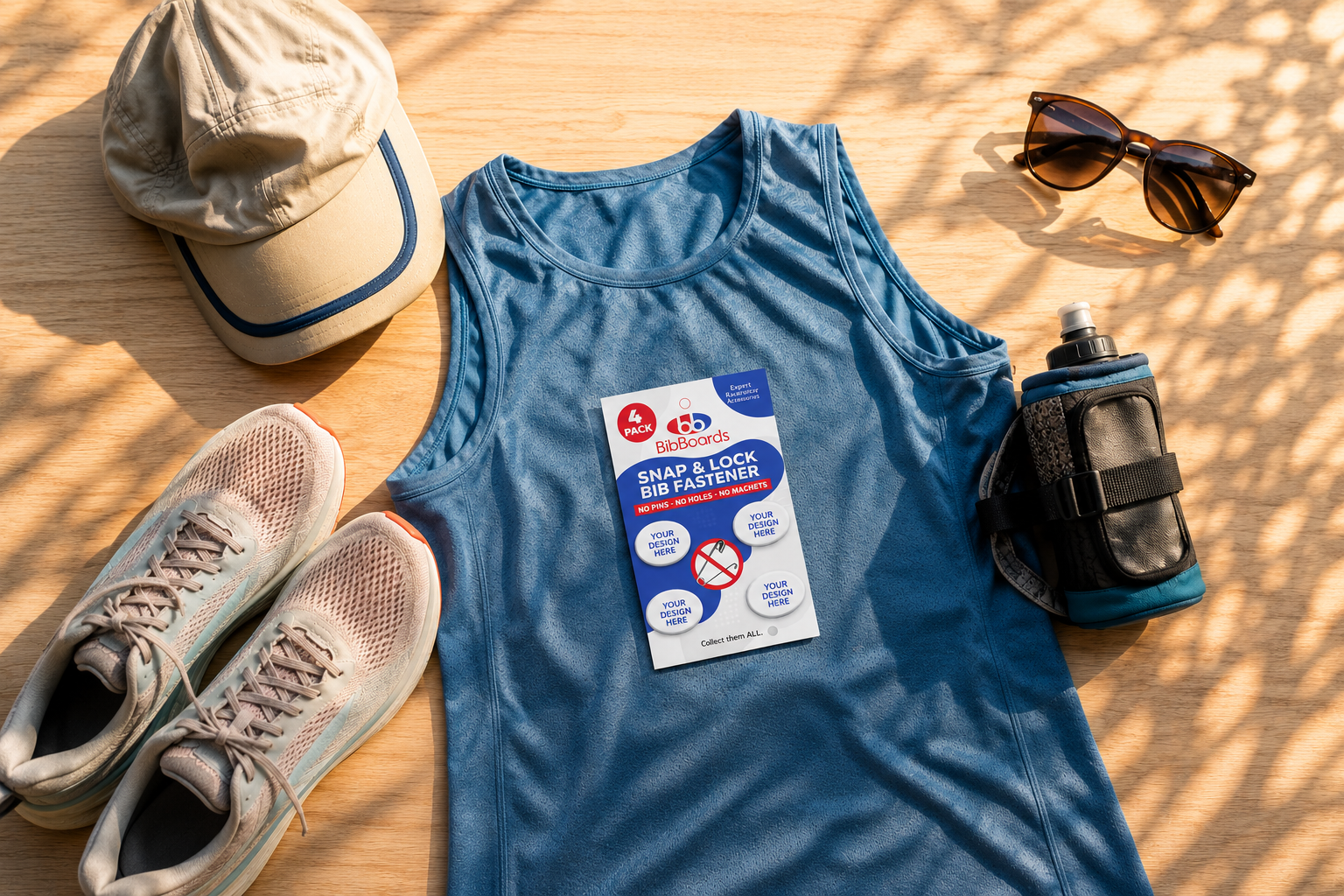
Race directors who switch away from safety pins are not adding a complicated new step, they are removing one. Bibs arrive pre punched with the same four holes pins always used, but instead of a dish of loose pins, runners get a bib that already attaches with a snap and lock fastener like bibSNAPS. There is nothing extra to hand out, nothing to spill, and nothing for a volunteer to restock mid morning. The table looks almost the same from a distance, just without the small bowl of pins that always needed refilling.
Why race directors are making the switch
The shift is showing up at more events for a few clear reasons.
- Less waste on the ground. Loose pins that get dropped or left behind add up fast across thousands of runners, and they are easy to step on in a crowded staging area.
- Fewer pin related complaints. A bib that flaps, folds, or falls off mid race generates support emails after the fact. A bib that stays flat for the entire course generates fewer of them.
- A cleaner brand impression. Race directors are increasingly thinking about packet pickup as part of the event experience, not just a logistics task, and a tidy table without a pin dish photographs and feels more polished.
- Volunteer time saved. Restocking pin dishes and untangling runners who lost theirs takes real volunteer hours over the course of a morning.
What it means for volunteers
Volunteers running a packet pickup table have one job that matters most, moving the line. Pulling pins out of the equation removes a small but constant task, restocking the dish, sweeping up dropped pins, and pointing confused first time runners toward instructions taped to the table. With pre attached or easily attachable fasteners already in hand, the table runs the same fast pace it always has, just with one fewer thing to manage when the morning gets busy.
What runners notice on race morning
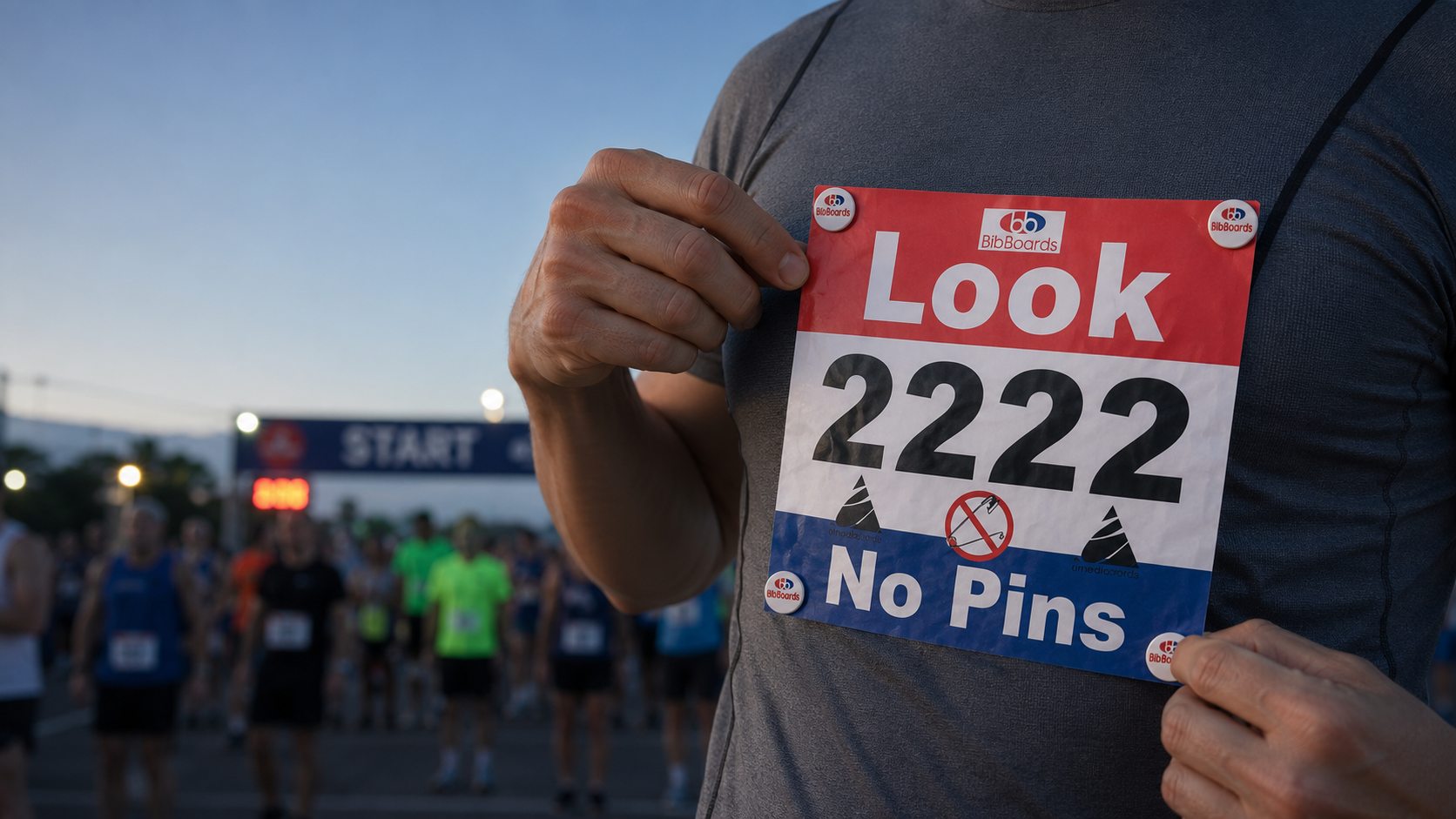
For runners, the biggest difference shows up later in the race, not at the table. A bib held flat at all four corners with bibSNAPS does not curl or sag the way a pin only bib can once a runner starts sweating. That means a more readable number for timing cameras and race photographers from the start line all the way to the finish. Runners also skip the small annoyance of fumbling cold fingers around sharp pins before the gun goes off, which is a tiny detail that adds up to a calmer, more comfortable start.
A small change with a real ripple effect
None of this requires reinventing packet pickup. The line still moves the same way, the table still hands out the same bib, and the morning still runs on the same schedule. What changes is everything underneath, less mess on the ground, fewer pin complaints after the race, and a bib that holds up better once runners are actually moving. It is the kind of change that runners may not notice consciously, but they feel the difference in how smooth the morning goes.
Quick Takeaway
- Pinless packet pickup removes the pin dish, not the table, the line, or the timeline race directors already run.
- Race directors are switching for less ground waste, fewer pin complaints, and a more polished event experience.
- bibSNAPS hold a bib flat at all four corners, which keeps numbers readable through sweat and wind better than pins alone.
The bottom line
Packet pickup does not need a pin dish to work well, it just needs a fastener runners can count on. Race directors looking for a cleaner table and a smoother race morning are finding that a reusable, hole free fastener solves problems a bowl of safety pins never could. Learn more about bringing bibSNAPS to your next event at bibboards.com and give your packet pickup table one less thing to restock.
A cleaner packet pickup table starts with a better bag. Here are race swag bag ideas worth the space they take up.
Packet pickup is one stage of a longer process. See how to organize a 5K for the full run of planning steps.

Leave a comment
This site is protected by hCaptcha and the hCaptcha Privacy Policy and Terms of Service apply.