

Every runner knows the routine. You pick up your packet, dig four small safety pins out of a plastic bag, and try to push them through a stiff paper bib and your favorite race shirt without stabbing your fingers. It usually happens in the dark, in the cold, and about thirty minutes before the gun goes off. Then you spend the first mile adjusting a bib that flaps, twists, or pokes you in the chest.
It does not have to be like that. More runners every season are skipping pins entirely, and the alternatives are faster, more comfortable, and easier on your gear. If you have ever wondered how to attach a race bib without pins, here is everything worth knowing.
Why Runners Are Moving Away From Safety Pins
Safety pins have been the default for decades, mostly because they are cheap and race directors can hand them out in bulk. That does not mean they are good at the job.
Pins put four small holes in every shirt you race in. Over a season, that adds up to dozens of permanent marks on gear you paid real money for. They are fiddly to attach, especially with cold hands or gloves on. They tend to loosen during long efforts, which is why you see runners constantly tugging at their bibs in race photos. And if a pin pops open mid run, it can scratch you or your shirt before you notice.
There is also a sustainability story here. BibBoards has helped remove more than 25 million safety pins from races, and that number keeps climbing as race directors switch to better systems.
The Main Alternatives to Safety Pins for Bibs
If you are ready to ditch pins, you have a few real options. Each works, but they are not all created equal.
Magnetic Bib Holders
Magnetic holders use two strong magnets that sandwich your bib and your shirt between them. They are quick to use and do not put holes in your gear. The tradeoffs are weight, occasional slipping during high impact running, and the obvious one: anyone with a pacemaker or certain medical devices should avoid magnets entirely.
Bib Belts
A bib belt is an elastic strap that goes around your waist with clips that hold the bib in front. They are popular with triathletes because race rules often require the bib to swap from back to front between legs. For road runners, belts add a layer you may not want, and the bib can bounce more than it would pinned to a shirt.
Snap Style Bib Fasteners
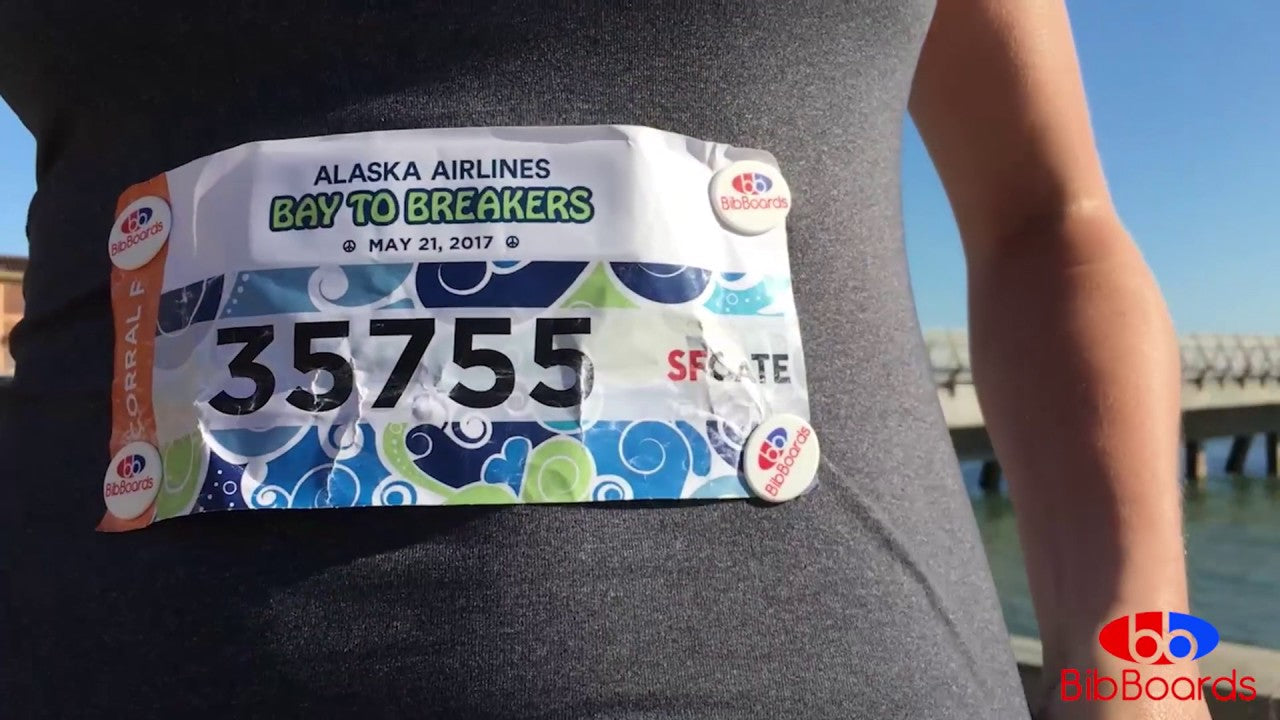
Snap fasteners are small plastic discs that lock together through the bib and shirt without piercing the fabric. They stay flat, do not loosen, and take seconds to attach. This is the category bibSNAPS lives in, and it is the option most runners land on once they try it.
Tape and Adhesive Options
A few brands sell adhesive strips that stick the bib directly to your shirt. They can work in a pinch, but heat, sweat, and humidity beat them quickly. Most runners who try tape go back to a reusable system within a race or two.
How to Use a No Pin Race Bib System
The setup is the same idea across most no pin systems. You position the bib on your shirt where you want it, then attach the fastener at each corner. With bibSNAPS, you press the two halves of the snap together through the bib and the shirt, and the bib stays locked in place until you pop it off.
A few small tips that make any no pin system work better:
- Attach your bib the night before so race morning is calm. You can shop bibSNAPS at bibboards.com and keep a set in your race bag.
- Place the bib high enough on your chest that it is visible in race photos but low enough that it does not ride up under a jacket zipper.
- Make sure the bib is flat, not folded or curved, so the timing chip and your number stay readable.
- If your shirt is technical fabric, do a quick tug test before you head out the door.
That is it. No bent pins, no holes, no fumbling.
What About Triathlons and Trail Races
Triathletes have specific rules about where the bib needs to be during the run leg, and many use a bib belt because it can spin around the waist between bike and run. A snap based holder works well here too if you attach the bib to a singlet that stays on for the run. Always check your race rules first.
Trail runners tend to wear vests or packs, which makes pinning a bib to a shirt awkward. A no pin system that clips to the vest strap or front pocket keeps the bib visible without piercing technical gear that costs hundreds of dollars.
Do You Actually Need Safety Pins for a Race
The honest answer is no. Race directors hand them out because they are the lowest cost option, not because they are required. Your bib number needs to be visible on the front of your body during the race. How you get it there is up to you. Pins, snaps, magnets, and belts all satisfy that rule.
If you race more than once or twice a year, a reusable system pays for itself quickly. You stop ruining shirts. You stop showing up to packet pickup hoping the volunteer remembered the pin bag. And you get a more comfortable race experience every time you toe the line.
Quick Takeaway
- Safety pins damage your gear, loosen during runs, and slow down race morning.
- Magnetic holders, bib belts, snap fasteners, and adhesive strips are the main alternatives to safety pins for bibs.
- Snap style fasteners like bibSNAPS stay flat, do not pierce fabric, and attach in seconds.
- Attach your bib the night before to make race morning easier.
The Better Way to Wear a Bib
The pins in your race bag are not the only option, and they are far from the best one. Once you switch to a no pin race bib system, you stop thinking about your bib mid run and start thinking about your race. That is the whole point.
Try it once. You will not go back.


Leave a comment
This site is protected by hCaptcha and the hCaptcha Privacy Policy and Terms of Service apply.